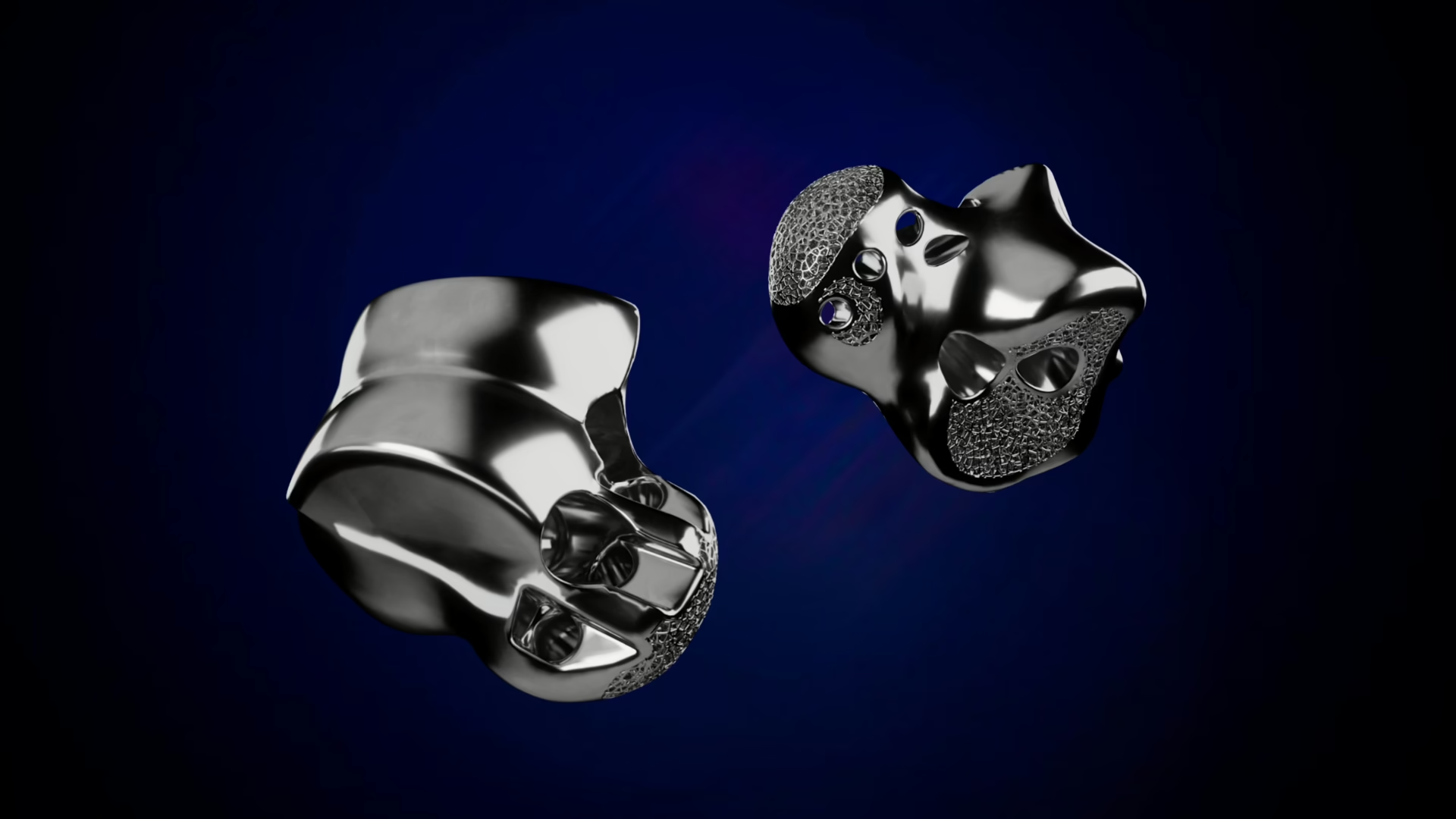


Most have no idea what it takes to design and manufacture a 3D-printed titanium femoral knee implant. So we sent one 40km above the Earth, to make them look.
In May 2026, a 3D-printed titanium femoral knee implant, manufactured by Croom Medical on a Renishaw additive manufacturing platform, was sent to the edge of space. Temperatures close to minus 60 degrees Celsius. Atmospheric pressure near zero. A descent that began in free fall at over 250 miles per hour. It was recovered intact.
But the real story was never about how high it travelled. It is about what it took to get there.
Watch the full film on YouTube
The implant
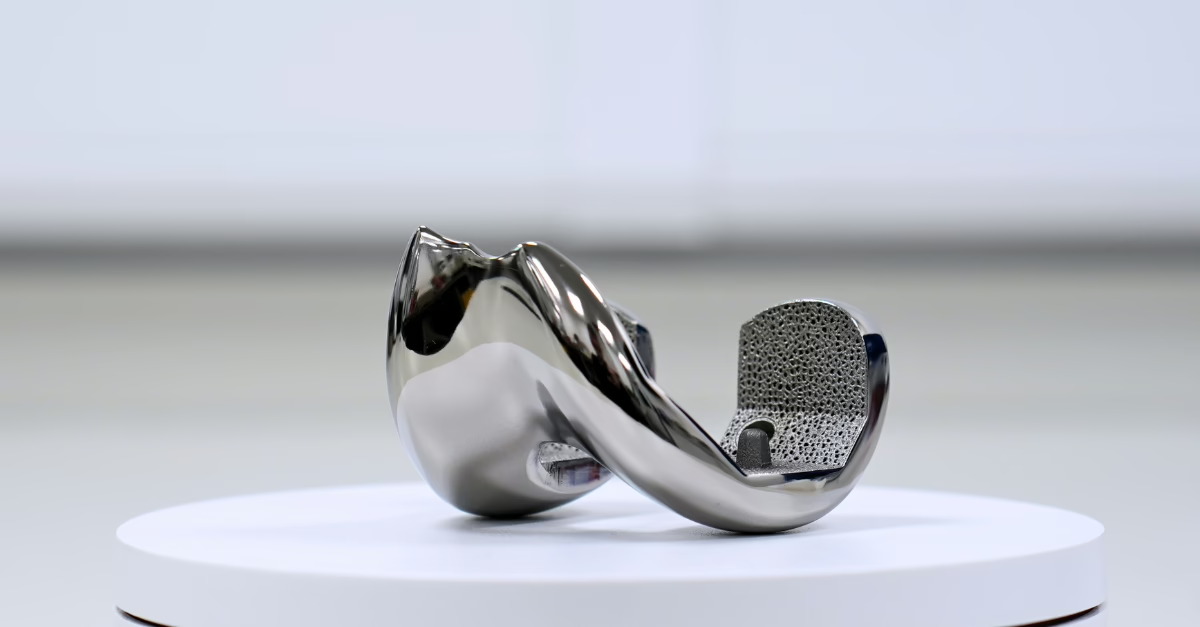
What went to space was a femoral knee implant: the distal part of a total knee replacement, the one that caps the end of the femur. It is the same implant we manufacture for orthopaedic OEMs every day. The kind that gives patients the freedom to move again.
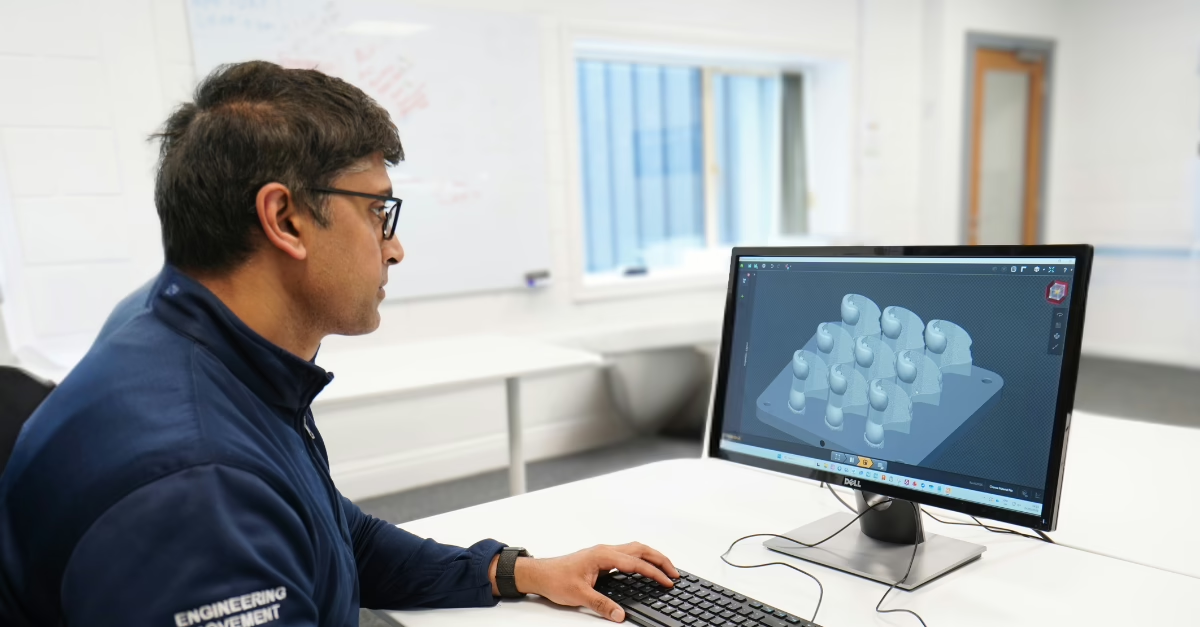
It was built in Ti-6Al-4V ELI, the medical-grade titanium alloy used for many orthopaedic implant devices. The implant was produced from thousands of micron-thin layers on a Renishaw additive manufacturing platform, prepared in Renishaw’s QuantAM software, and finished in-house at Croom Medical through a post-processing chain that takes it from a rough printed surface to the dimensional and exacting standards of a finished articulating surface.
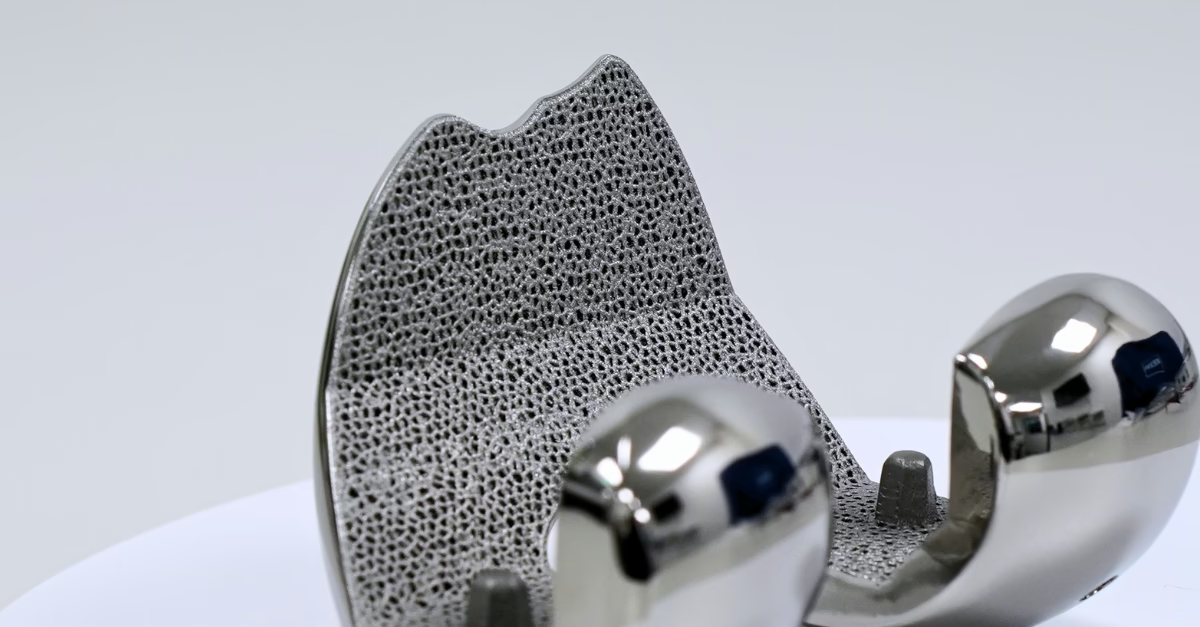
On the bone-facing surface, an engineered lattice structure designed to encourage osseointegration, with controlled pore geometry, porosity and strut thickness. On the articulating side, a polished surface brought to the tolerances of a finished knee implant. Both on one implant, in a single build. Subtractive manufacturing cannot produce that geometry. Casting cannot produce it. Additive can, which is why orthopaedic OEMs now specify lattice structures as a design intent rather than accepting them as a manufacturing compromise.
Why Renishaw
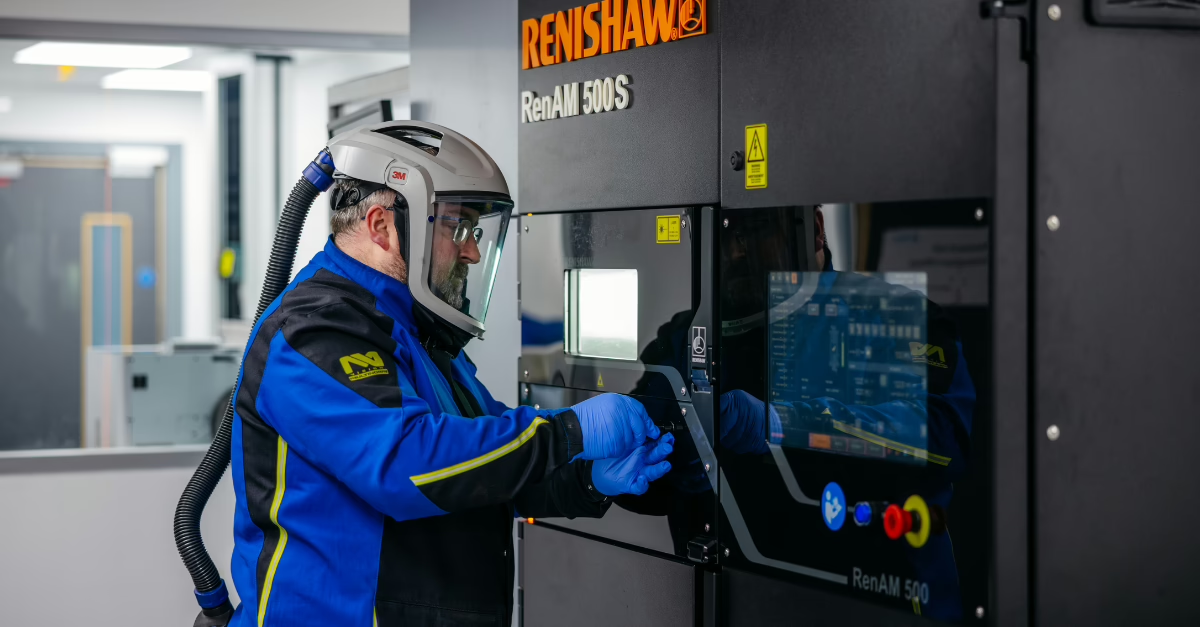
Croom Medical has been leveraging Renishaw’s technology platforms for years. Build-to-build repeatability is stable, which matters when every implant has to be identical to the one before it. Parameter control is open, so process windows can be developed specifically for the medical materials running through the facility rather than accepting factory presets. QuantAM handles build preparation and parameter management at the front of that workflow. The technical relationship with Renishaw’s applications engineers is iterative, and challenges get resolved against the workflow rather than around it.
What near-space actually tests
Not the implant. The implant was already finished to the specification of a knee implant before it left the ground, and nothing about altitude tells you anything useful about how a knee performs inside a human femur. What near-space does expose is the discipline of the manufacturing chain behind the implant. A production-configured medical AM part, subjected to conditions nothing in its intended life will come close to, returning indistinguishable from the component that left.
That is what the mission was really about. Decades of expertise, extraordinary precision, and the people behind every stage. The belief that something created to improve human life deserves to be seen by the world.

The recovered implant will be on display at the Croom Medical booth at OMTEC 2026 in Chicago, 9 to 11 June. Come and see it. Ask us how it was built.