


Toolmaking & Automation
Toolmaking and automation for orthopedic implants
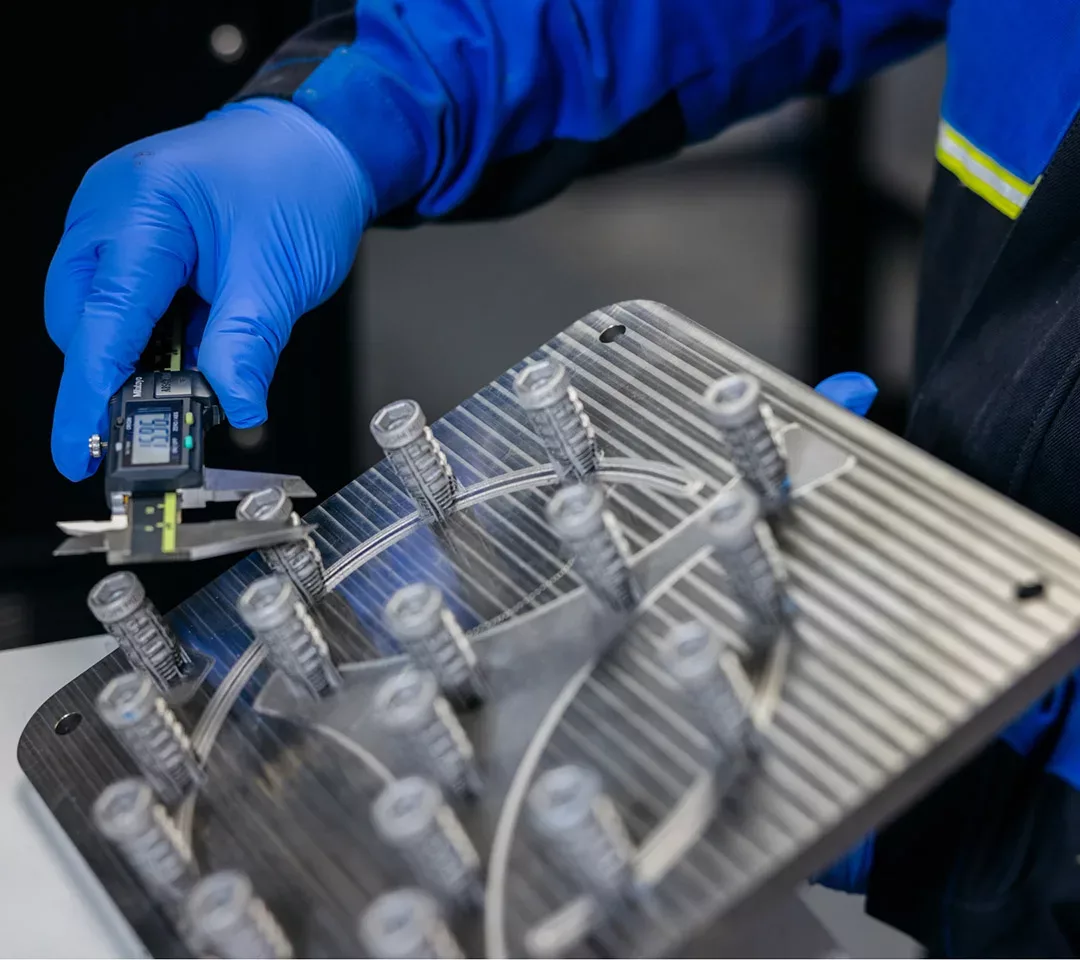
At Croom Medical, our toolmakers design fixtures around the component, the cutting tool and the inspection method. The photograph shows a cutting tool approaching an implant component held in a fixture.
Holding the part through machining and finishing
A fixture determines which faces a tool can reach, how a thin section is supported and whether the operator can locate the next size on the same datum. Our Limerick toolroom designs the workholding alongside the machining, finishing and inspection teams.
Worked example: a metal femoral head
The bearing surface must remain accessible for polishing. The internal taper gives the team a way to locate the head without gripping the finished sphere. The toolmakers review contact points, clamping and tool clearance across the size family before the finishing sequence is set.
A robotic polishing cycle then presents the bearing surface to the finishing tool in a controlled sequence. After finishing, coordinate measurement checks the sphere and its relationship to the taper. The inspection programme has to cover the same family of sizes as the fixture.
Explore the femoral-head machining and inspection example
Where automation earns its place
On a femoral knee component, a robot can present the part to an abrasive belt. The fixture has to locate each size consistently and protect the surfaces outside the finishing operation.
See the knee grinding and finishing route
What to bring to a tooling review
Send the part family, the features that are difficult to hold or reach, the surfaces to protect and the annual demand by size. We can then review whether a common fixture, a changeable insert or a dedicated setup suits the family. Drawings can follow under a confidentiality agreement.