

Knee implants
Femoral knee component manufacturing
Croom Medical grinds, finishes and inspects cast femoral components for orthopaedic OEMs in Limerick, Ireland.
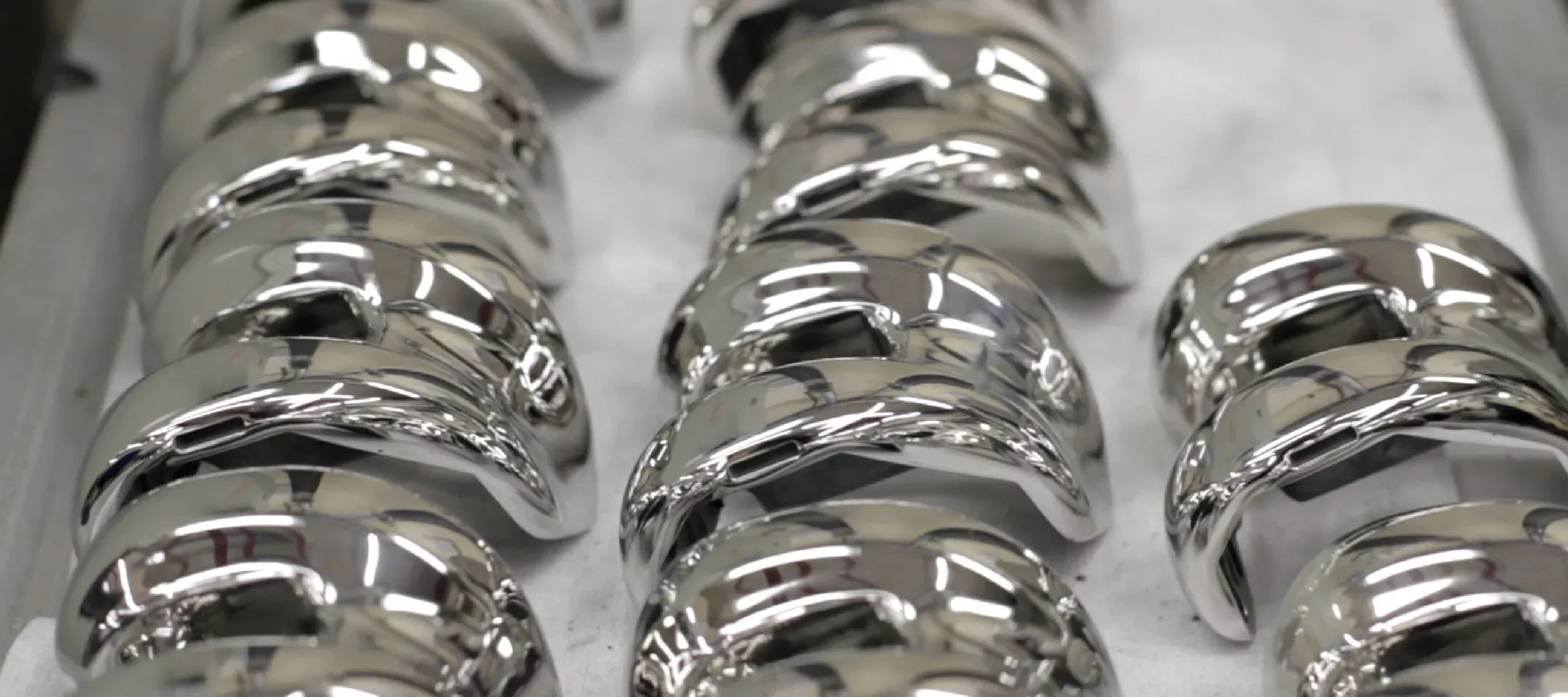
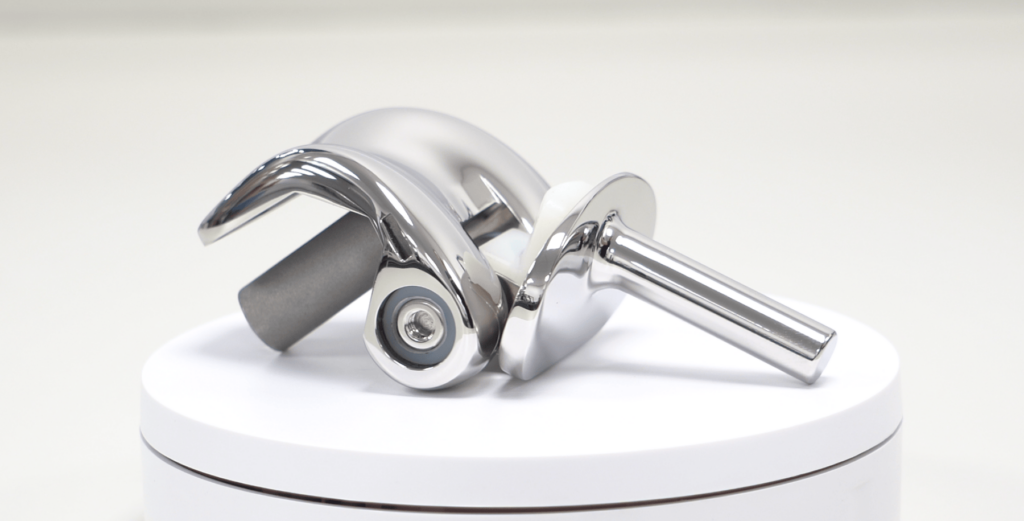
Polished femoral components at Croom Medical.
- Since 1995
- Femoral manufacturing
- Croom, Co. Limerick
- Manufacturing site
- ISO 13485:2016
- Quality management system
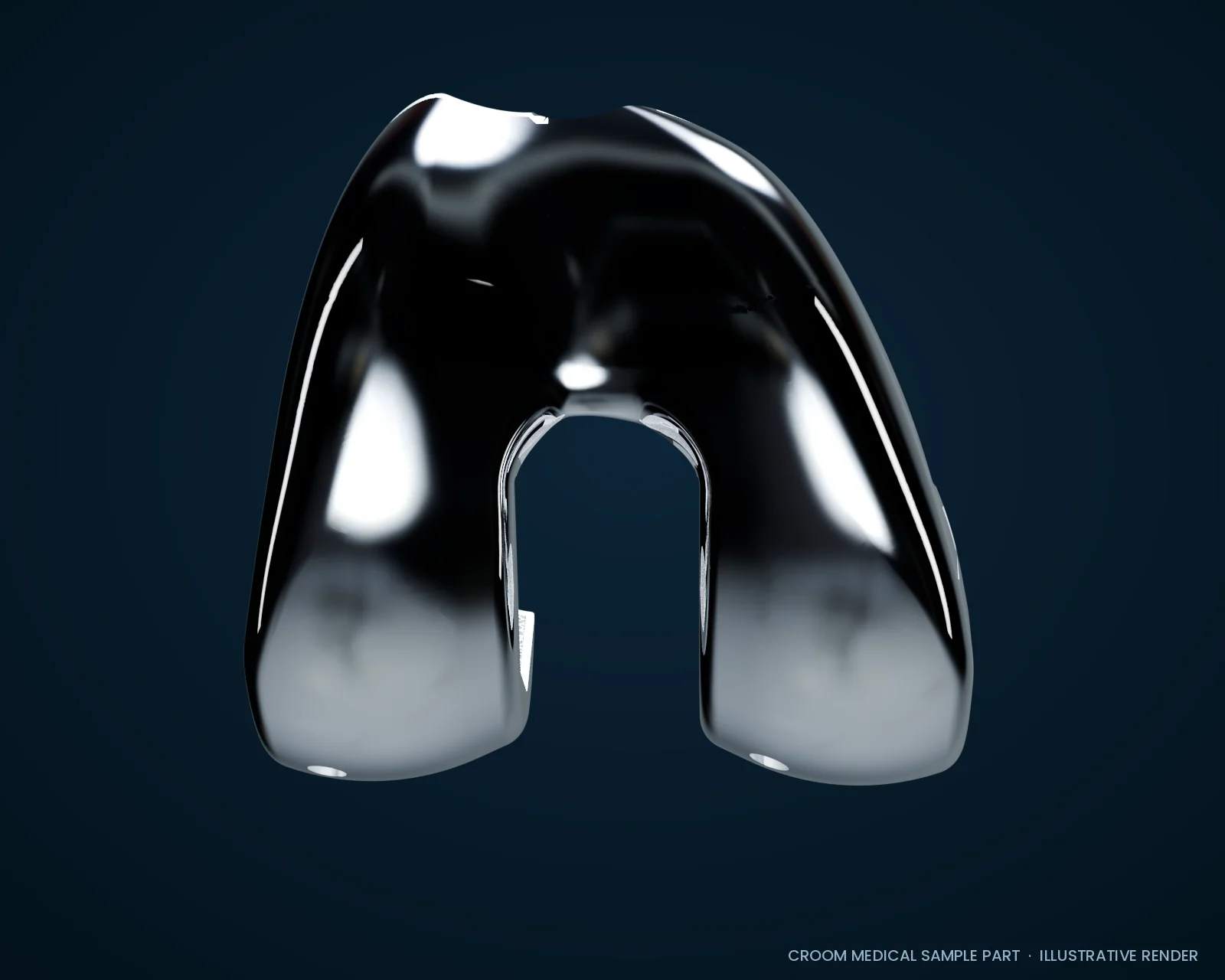
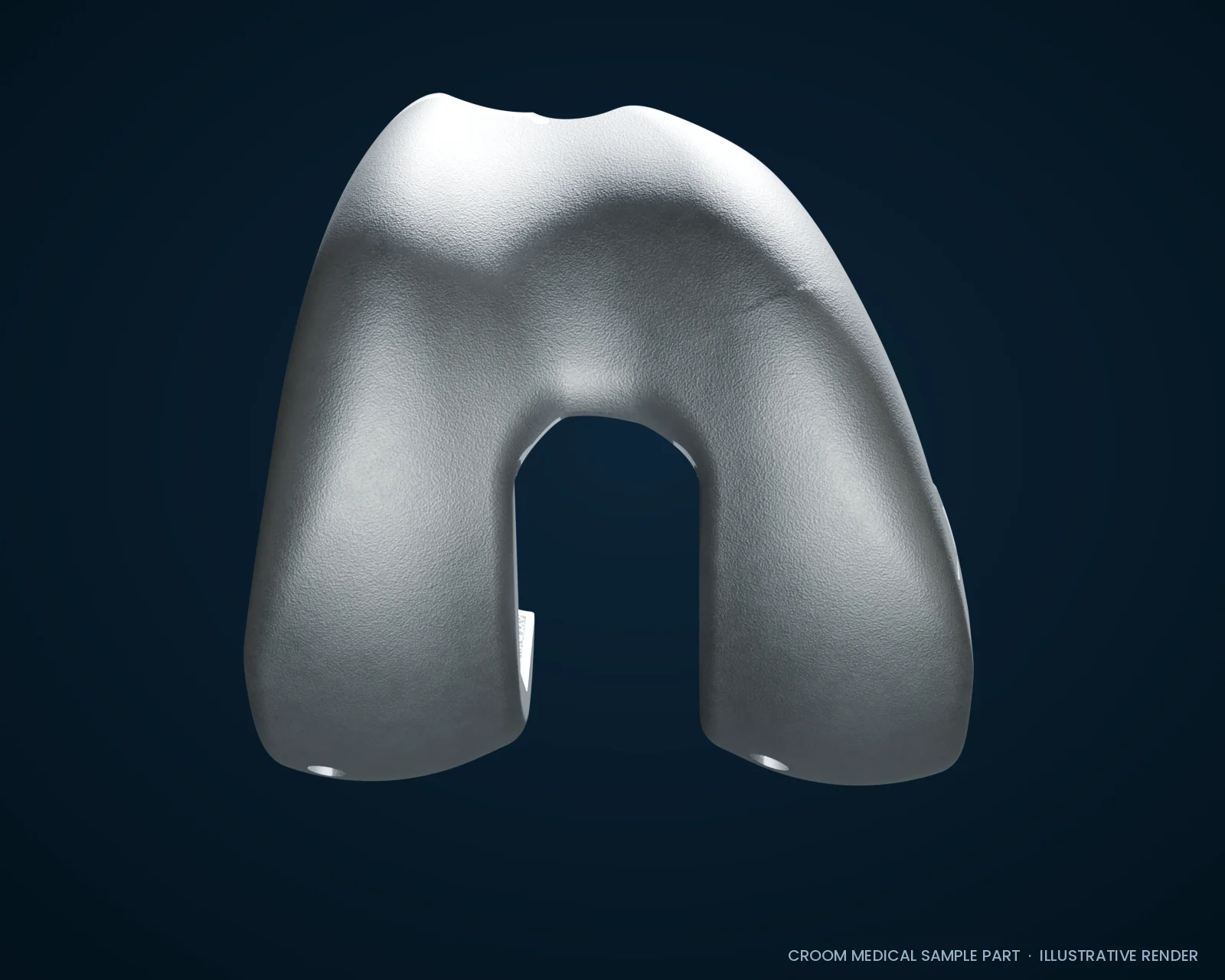
Bearing and bone-facing surfaces
The curved condyles articulate against the tibial insert. Their geometry and polished finish have different requirements from the surfaces that face the bone.
Workholding and surface control
Our toolroom designs fixtures around the casting so the grinding wheel can reach the specified features. The OEM drawing defines which surfaces to polish, which to protect and how to inspect them.
- Form
- Preserve the specified profile through grinding and finishing.
- Surface
- Mask adjacent features where the drawing specifies a different finish.
- Checks
- Agree the inspection method for each critical feature.
Manufacturing stages for a cast femoral component
The route starts with the incoming casting. Croom and the OEM agree the sequence, inspection criteria and responsibilities for any external operations before production.
Drawing review and workholding
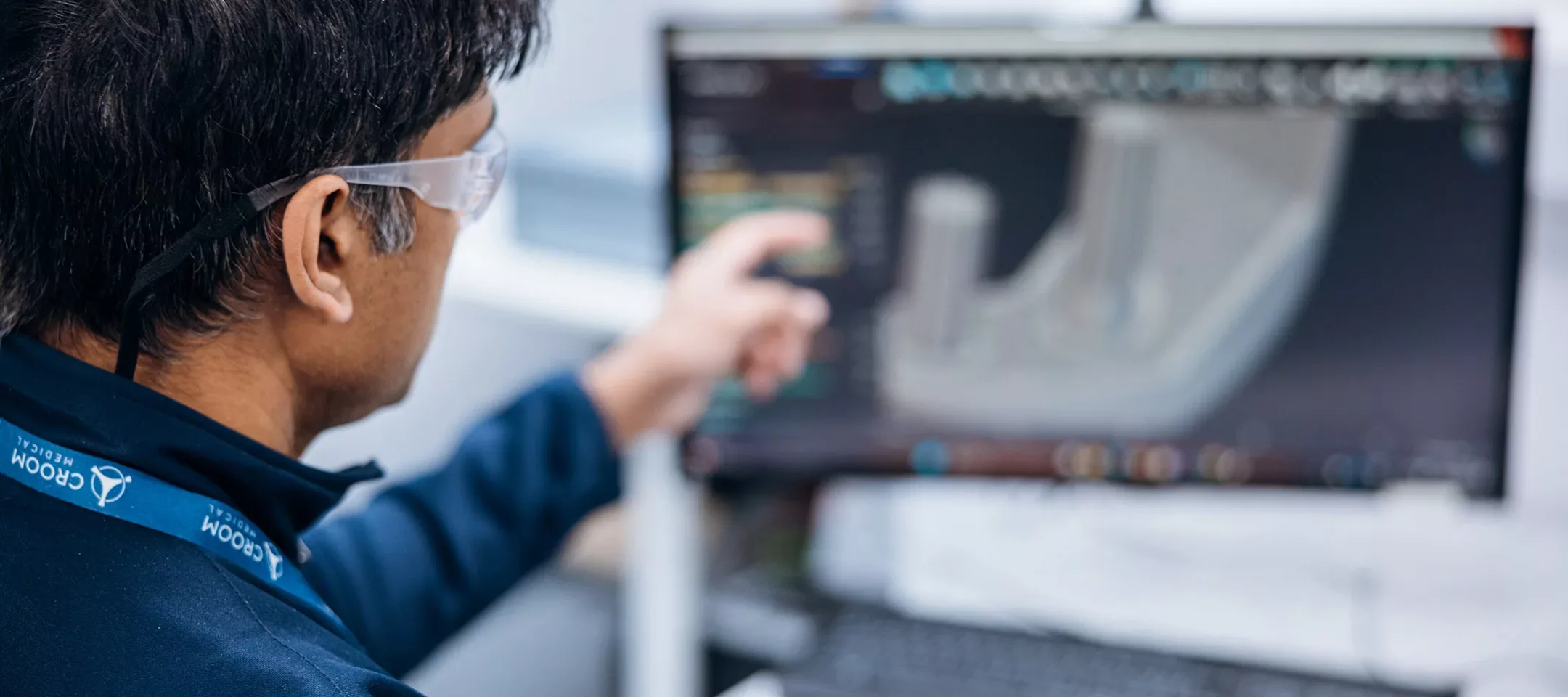
Review the starting material, drawing and size mix. Croom’s toolroom builds fixtures around the component, leaving the required surfaces accessible for machining and inspection.
Agree the operations in scope, the nominated features and how the component will be inspected.

Profile grinding on the HAAS Multigrind CB
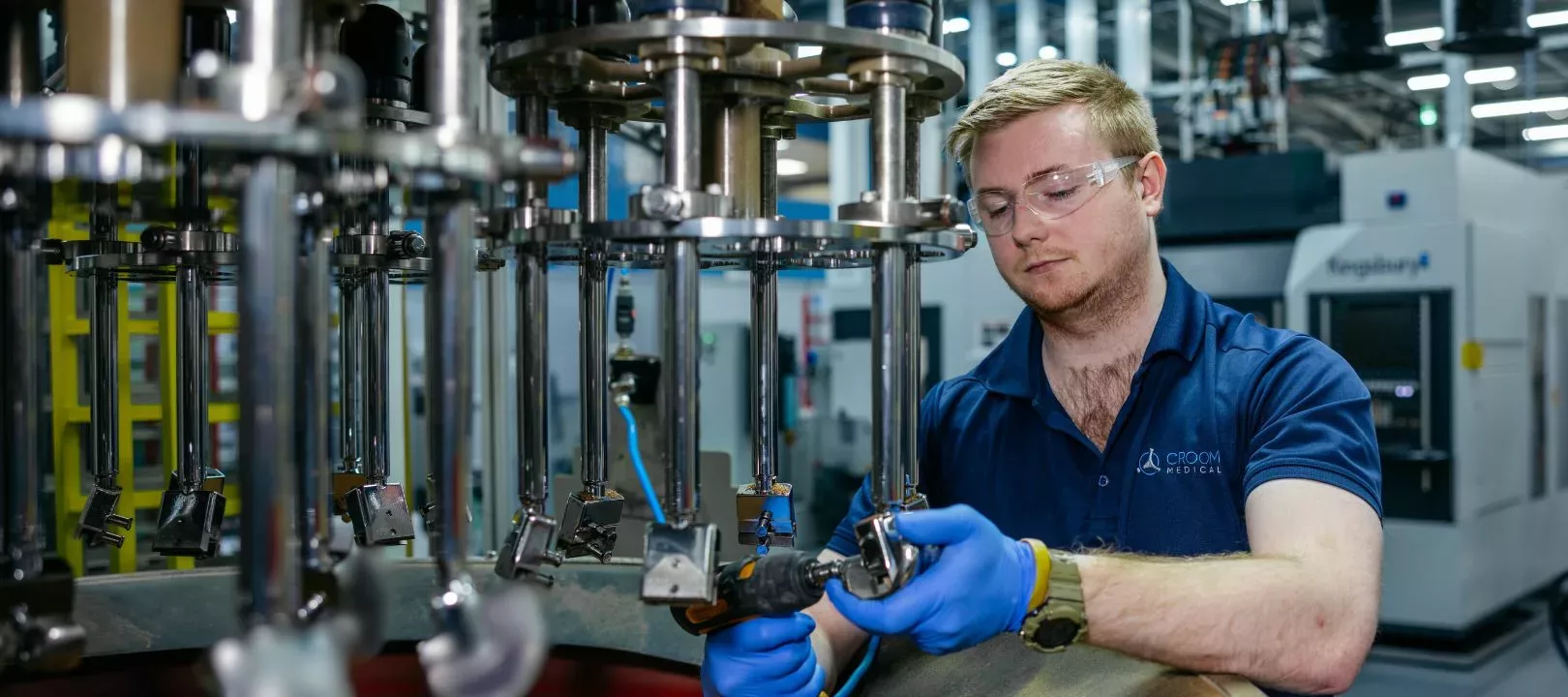
On a primary femoral programme, Croom inspects the incoming casting, grinds the specified features on a HAAS Multigrind CB and checks the ground geometry. Workholding and tool access are considered together.
Check the ground features against the agreed drawing and inspection method before the next operation.
Finishing the bearing surfaces
Croom’s femoral finishing work includes Rösler mass finishing and local polish touch-up. Articulating surfaces and bone-facing surfaces have different requirements. Robotic belt finishing is an option for suitable surfaces.
Define the finish required on each area and protect the features that must remain unchanged.

Cleaning and inspection
MecWash cleaning and fluorescent penetrant inspection, where the specification requires it, form part of Croom’s femoral manufacturing work. Coating or other external operations require agreed handovers and return checks.
Agree the cleaning scope, required inspection and acceptance at each handover. Final cleaning and sterilisation responsibilities are programme-specific.
Qualification and release
A new line or second-source transfer starts with the component family, starting material, annual demand by size and target qualification date. The manufacturing route, evidence and release requirements need to be agreed together.
Define qualification responsibilities, the inspection and release package, and the controls for subsequent process changes.
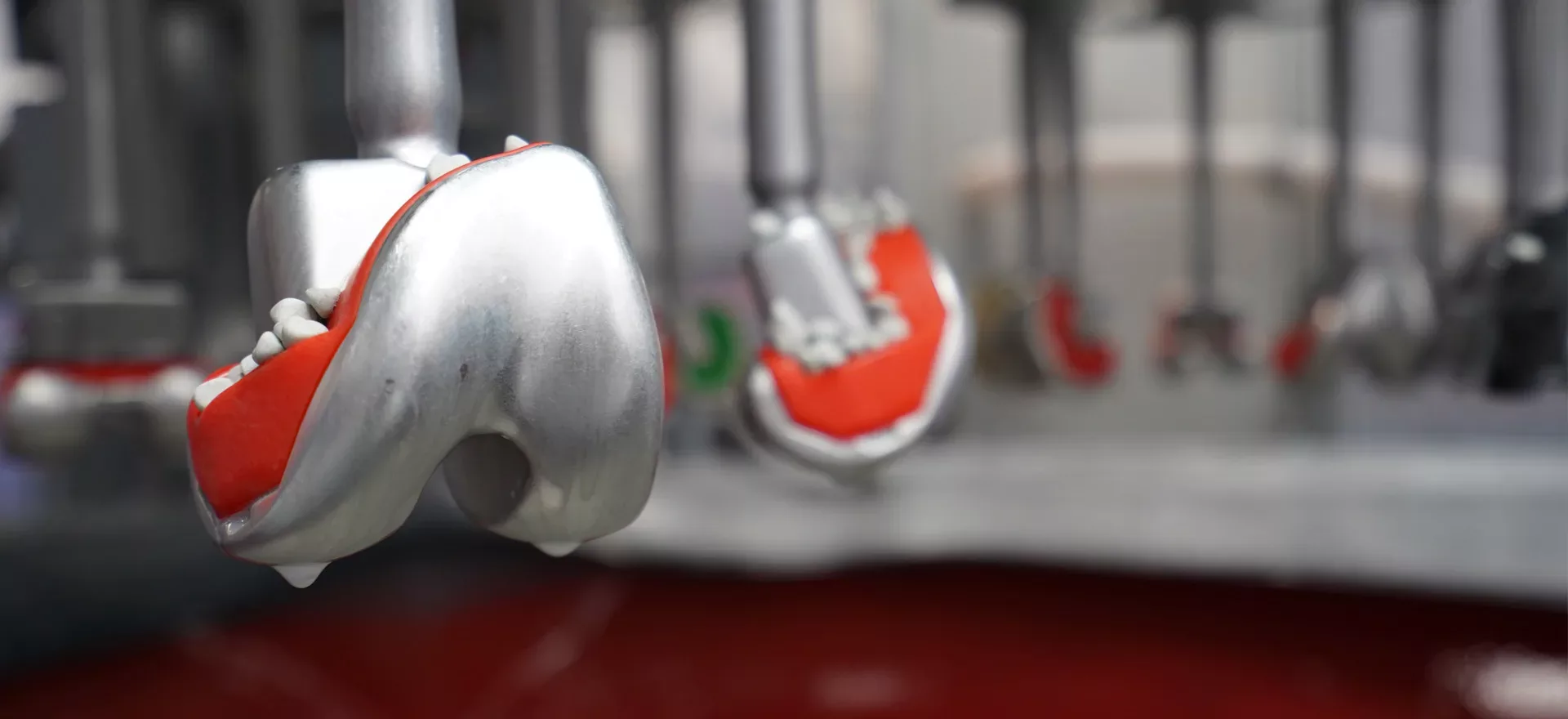
Masked femoral components on the finishing rack.
Masking and surface finishing
The fixture presents the areas that need finishing. Masking protects adjacent features, and inspection checks each surface against its own drawing requirements.
Explore finishing and polishingOn the factory floor in Limerick
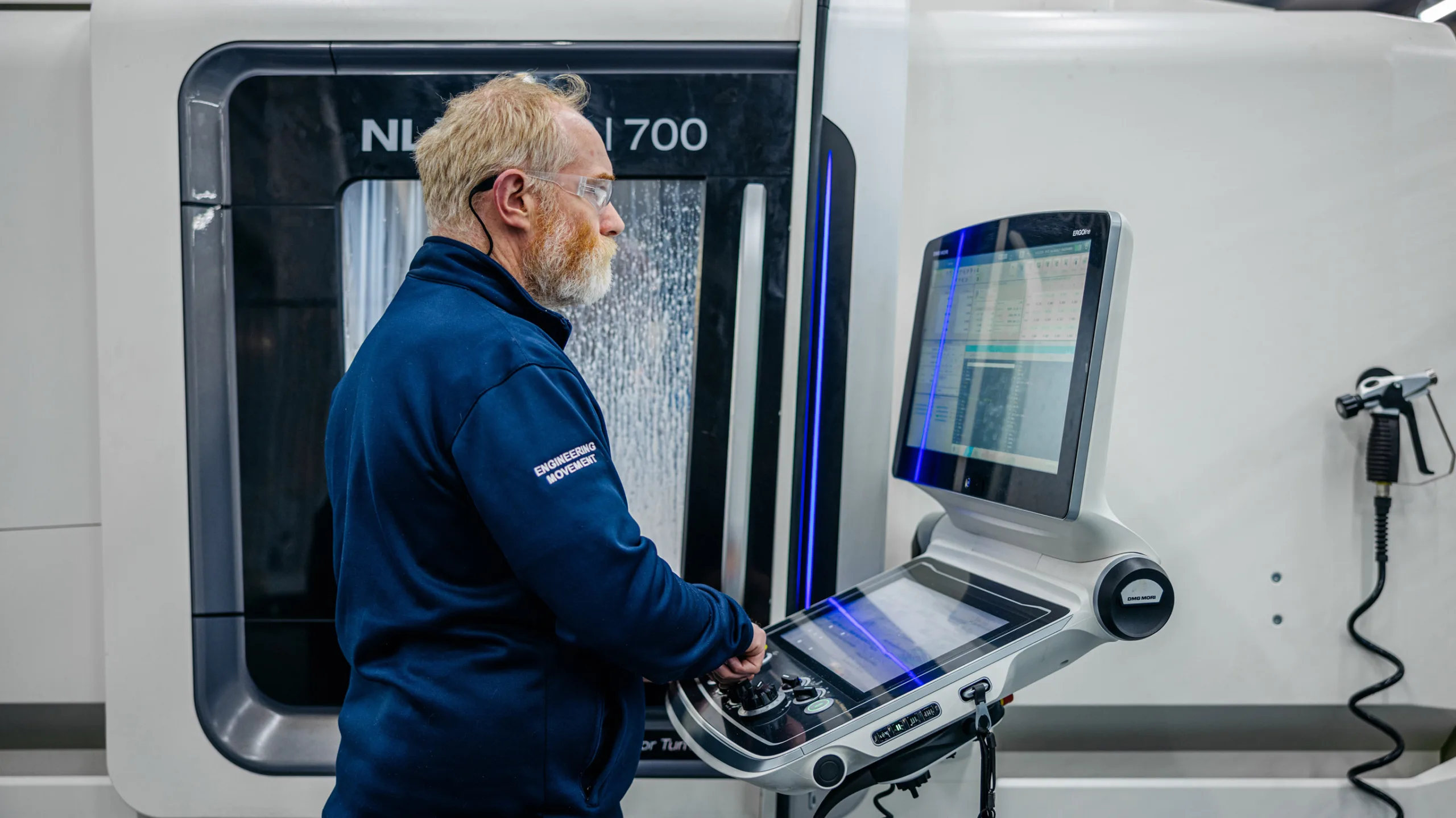
CNC machining and materials testing support the femoral programme at Croom. Our engineers agree the process and inspection records for each component family with the OEM.
Discuss a femoral component with our engineers
For a new line, transfer or second source, share the component family, starting material, annual demand by size and target qualification date. We can arrange confidentiality before you send drawings.
Request a manufacturing review