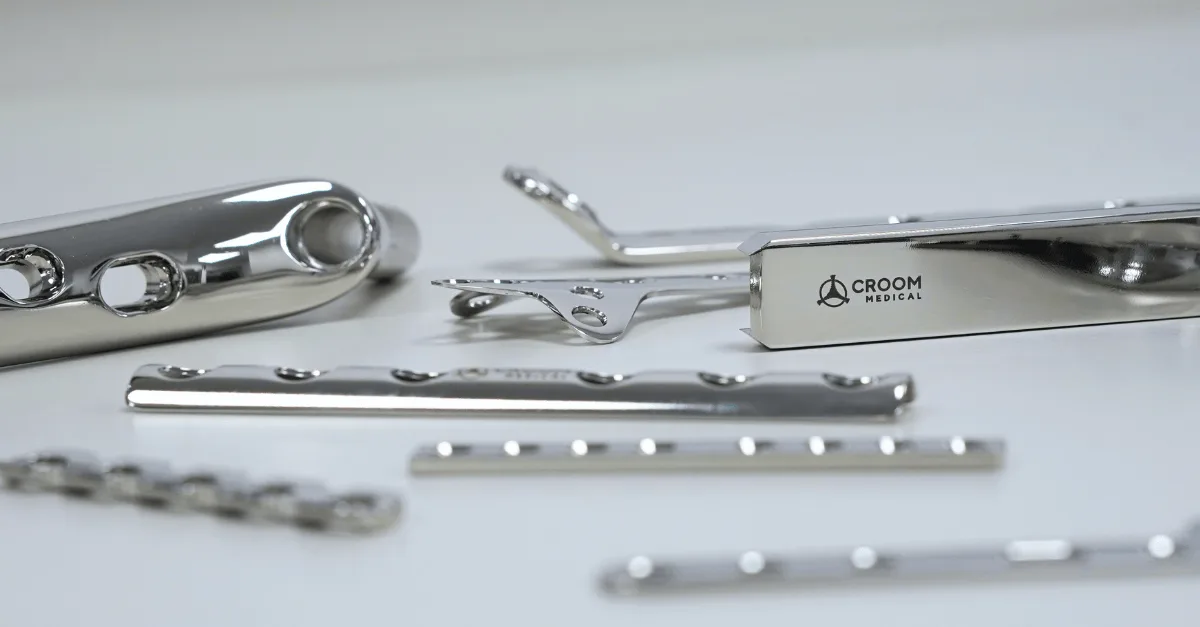
A second-source transfer for trauma plates and screws starts with a simple question. Can the receiving manufacturer demonstrate that the screw seats in the finished plate using the same acceptance criteria as the existing source? Two parts can each have a dimensional report and still leave that question unanswered. At Croom Medical in Limerick, we review the drawings together before agreeing how to quote the family.
Start with the mating parts
Identify the screw, hole and driver combination for each plate. On a locking plate, mark the hole axis and the threaded interface. On a compression plate, identify the seat geometry that controls contact with the head. Supply the drawing revisions for both components and the relevant driver or gauge. If several screws fit one plate, show those combinations in a table.
Choose the first article by feature
The highest-volume size is a useful starting point. It may miss the longest unsupported plate section, the smallest hole or the deepest screw recess. List the differences between sizes and agree which representative parts will exercise the workholding, tooling and inspection methods. Record the rationale so that sourcing, engineering and quality are quoting the same transfer scope.
Agree how the interface will be accepted
Identify the features that need dimensional results, the interfaces checked with a gauge, and the stage at which the mating check takes place. A gauge used on a machined component and a gauge used after finishing answer different questions. Include the gauge drawing or specification, its calibration requirements and any finishing or marking restrictions on the mating surfaces.
Build the RFQ around the first released lot
- Released models, drawings and a size matrix covering the intended plate and screw combinations.
- Material, finish, marking and cleaning specifications, including any operations that must use an approved source.
- Inspection plans, gauge details, first-article requirements and the evidence needed for OEM approval.
- Demand by size, launch quantities and the order in which the family needs to transfer.
With that information, the OEM and Croom can distinguish common work from size-specific qualification and agree the sequence for bringing the second source online.
Explore trauma plate and bone screw manufacturing · Process transfer and validation