Home / Insights / Case Study /
Porous tantalum lattice samples for research
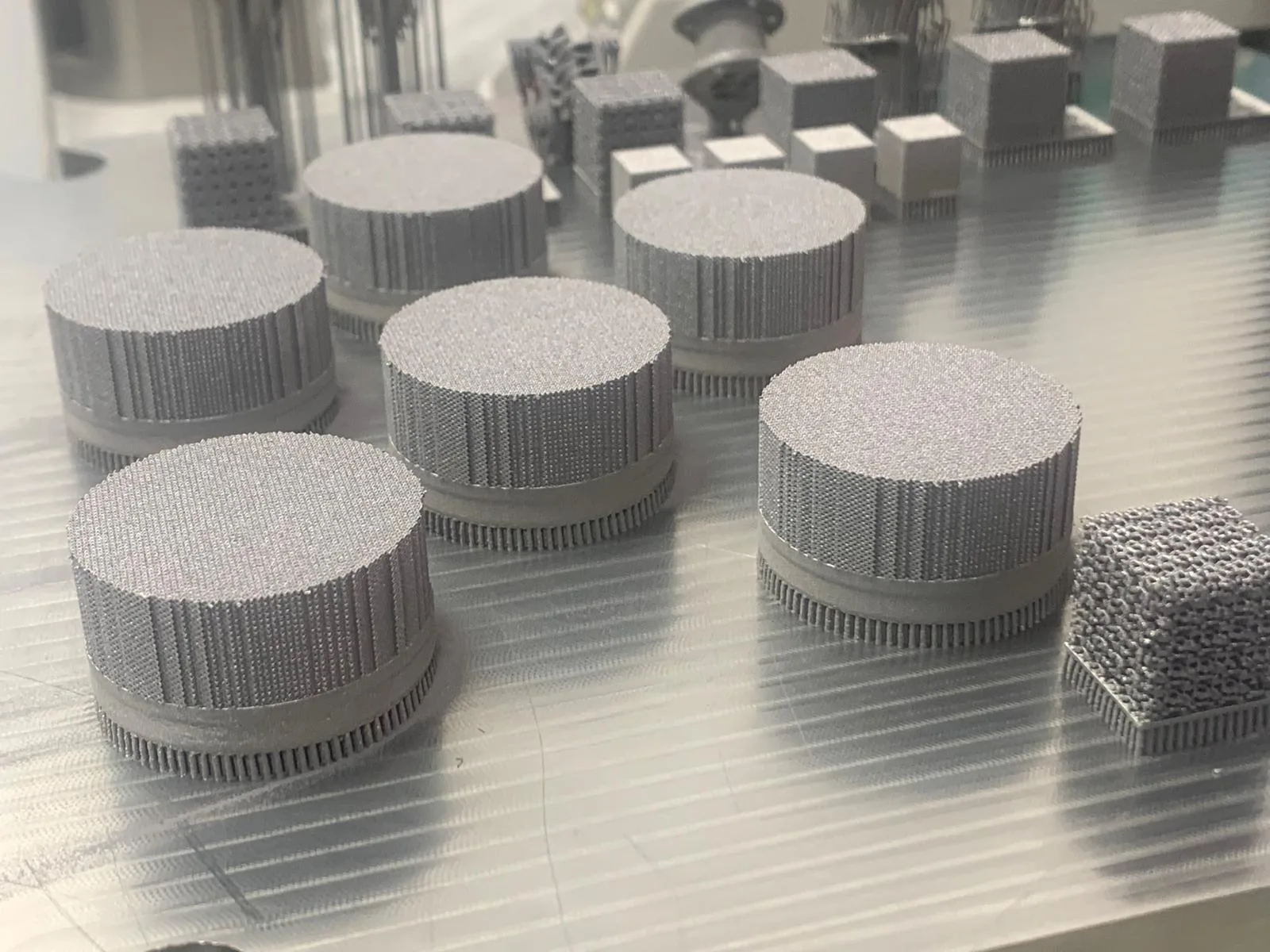
Croom Medical supplied porous tantalum lattice samples to a research organisation. The request concerned the lattice itself. The researchers specified a cylindrical sample envelope and identified the lattice density and strut size they wanted quoted. That gave the engineering team a more useful starting point than a request for a “porous tantalum part”.
What the sample brief defined
The outside envelope describes the sample that must fit a holder or test arrangement. Relative density describes how much of that envelope the design intends to fill with metal. Strut diameter describes a local feature within the lattice. These are separate requirements. A drawing or model that gives only the outside dimensions leaves the internal geometry unresolved.
What Croom delivered
Croom’s shipment records document two dispatch entries for porous tantalum lattice samples. The deliverable was a set of physical specimens for research. The quoted geometry describes the design request. Measured strut dimensions, density and performance would each require their own inspection or test results.
Specifying a porous tantalum sample
For a similar enquiry, share a model of the lattice and its outer envelope, the target density, the nominal strut dimensions and the number of specimens per variant. Identify which faces will contact the test fixture and which measurements will drive the next design decision. If the purpose is to compare variants, say which dimensions should remain constant across the set.
Croom Medical’s TALOS™ platform brings laser powder bed fusion of tantalum to development programmes in Limerick. The sample brief gives the research and manufacturing teams a common basis for agreeing the build, specimen identification and any accompanying measurements.
Explore TALOS™ tantalum 3D printing · Materials testing at Croom Medical