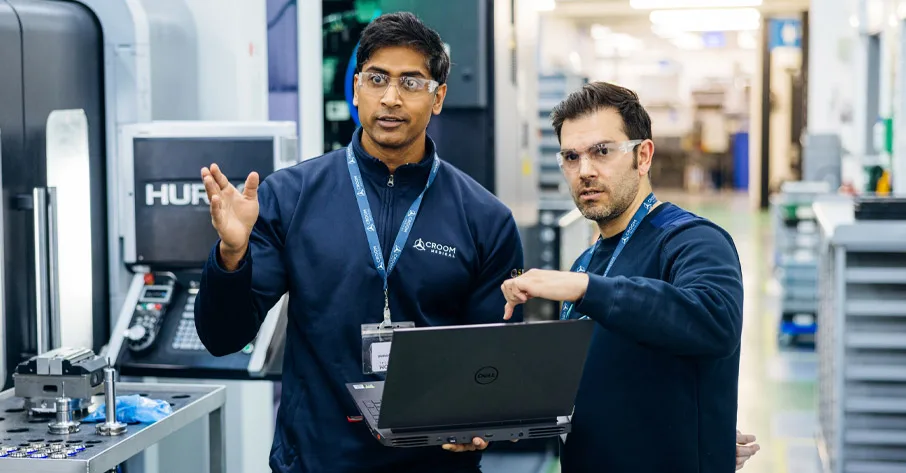
The arrival of a DMG MORI NTX 1000 Gen 3, documented in our Week 24 ACOT update, marked a tangible step in the development of the new centre. A building designed for advanced orthopaedic manufacturing had received its first new production asset. The wider investment programme is focused on how machining, additive manufacturing, thermal processing and inspection will work together.
Machining capacity with a clear purpose
The NTX platform combines turning and milling within one machine. For suitable components, that approach allows more of the manufacturing sequence to be brought together, reducing the need to move a part between separate machines and establish its position again at each operation.
In orthopaedic manufacturing, the value lies in the relationship between features as much as in the individual features themselves. Bringing operations together can help an engineering team plan how to hold the component, reach its surfaces and maintain consistent reference points throughout machining. The final route remains specific to the component and its inspection requirements.
Further precision machining capability is included in the ACOT programme, with tooling, fixtures, automation and operator training considered alongside each machine.
Expanding additive capacity and thermal processing
Two additional 3D Systems DMP350 Flex platforms are included in the capital programme. The aim is to provide more capacity for metal additive manufacturing and greater flexibility in how development and production work are scheduled. These additions form part of the phased equipment rollout; delivery and installation are followed by the checks and qualification appropriate to their intended use.
Vacuum furnace investment is another part of the plan. Thermal processing is an important step in many metal additive manufacturing routes, and developing this capability within the campus is intended to bring greater control over process development and scheduling.
Together, these investments address different stages of the same route. A printed component may still require thermal processing, precision machining, surface finishing, cleaning and inspection before it meets the customer’s requirements. Capacity planning therefore needs to follow the component through the full sequence.
Preparing equipment for dependable use
Machine arrival is a visible milestone. Productive capacity also depends on utilities, safe installation, maintenance arrangements, operator training, process development and documented verification. The ACOT programme brings these activities together in stages as the facility moves towards operation.
For our OEM partners, the intended benefit is a manufacturing route with fewer external handoffs and more closely coordinated engineering decisions. Questions about geometry, material condition, finishing and measurement can be considered together as a programme develops, with the relevant specialists involved at each stage.
We will continue to share the equipment milestones as they are reached. Watch the NTX arrival update for a view of this stage of the investment, or contact our team to discuss a manufacturing programme.